Valheim Beginner's Guide — Everything You Need to Know Before You Sail
Published 2026-09-239 min read
A complete Valheim beginner's guide for 2026: first-day priorities, the biome progression order, food policy, boss prep and the mistakes that cost new vikings their gear.
Valheim drops you into a procedurally generated Viking afterlife with a raven, a bare fist and no instructions. Ten players can share a world, every biome is a gear check, and the difference between a smooth run and a miserable one is almost always knowledge. This page is the knowledge — the full mental model of how a Valheim campaign fits together, updated for the 1.0 release and the Deep North.
What Valheim actually is
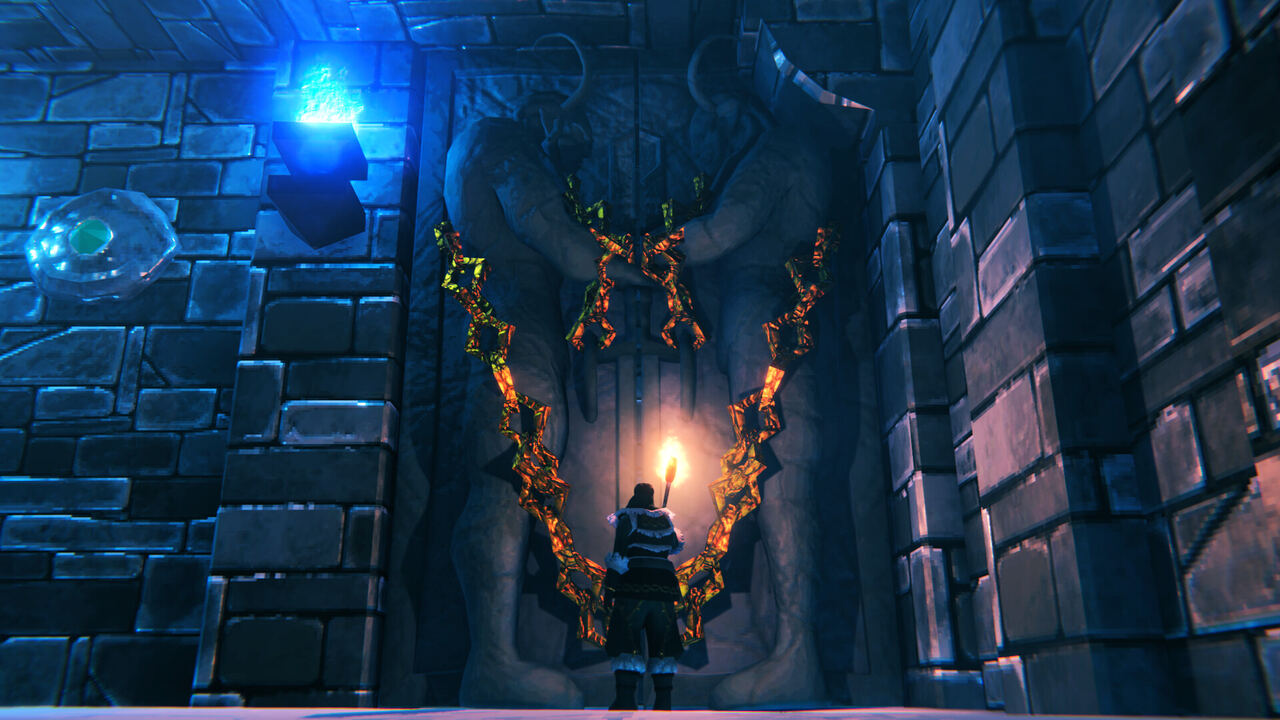
Valheim is a co-op survival and exploration game for 1–10 players set in a purgatorial tenth world, where the dead are meant to prove themselves worthy of Valhalla by slaying Odin's ancient rivals. You build, you farm, you sail, and you hunt a chain of eight bosses — Eikthyr, The Elder, Bonemass, Moder, Yagluth, The Queen, Fader and, since 1.0, Kall Fimbulbringer in the Deep North. Each boss drops a trophy that grants a passive power and an item that unlocks the next biome's tier of crafting. That loop — beat boss, craft up, push into harder territory — is the entire spine of the game.
The progression order
Learn the biome order and half the game's confusion disappears:
- Meadows — spawn biome. Wood, stone, boars, deer, and Eikthyr.
- Black Forest — copper and tin (together they make bronze), burial chambers, surtling cores, The Elder.
- Swamp — iron in sunken crypts, wraiths, draugr, Bonemass.
- Mountain — silver (found with the wishbone), drakes, stone golems, Moder.
- Plains — black metal, barley and flax, fulings, lox, Yagluth.
- Mistlands — sap, eitr, magic weapons and staffs, The Queen.
- Ashlands — flametal, the Charred, Fader.
- Deep North — the 1.0 finale: Jotun invaders, Nord-tier gear, Kall Fimbulbringer.
Never skip a tier. Iron gear makes the Mountain survivable; silver gear makes the Plains fair; each step down compounds.
First-day priorities
Your first session has exactly three goals: a workbench under a roof, a bed to respawn at, and food in all three slots. Punch branches and stones on the beach, chop a few pines, kill boars for meat and hide, and build a 2×2 hut with a campfire. Do not chase ambition on day one — no mining, no sailing, no swamp. Night in the Meadows is survivable; night without a bed is where campaigns die, because dying far from a resting spot strips your skills and strands your gear in a tombstone you may never reach.
Keep reading:
The three rules veterans never break
- Food is your health bar. Your maximum HP and stamina come entirely from what you eat, and the best food of each era is cooked at a cauldron, not foraged. Upgrade your cauldron chain early and eat the top three foods you can craft at all times.
- Portals do not carry metal. Copper, iron, silver, black metal and their ores only move by ship or cart. Plan smelting outposts near ore instead of hauling ore home, and keep a "no-metals" portal network for everything else.
- Death is a logistics problem. Every skill loses progress on death, but gear loss hurts more. When exploring dangerous biomes, carry a portal materials kit (fine wood, surtling cores, greydwarf eyes) so a death is a walk, not a voyage.
Rest, comfort and stamina
The Rested buff multiplies your stamina regeneration and speeds health recovery, and its duration scales with the comfort level of your base — a hearth, a chair, a table, banners and decorations all add comfort points. Resting under a roof near a fire before a long expedition is not roleplay; it is the single strongest buff in the game. Similarly, wetness slows stamina regeneration — between swimming, rain and fog, staying dry and warm is a real combat advantage, so carry wood for a quick fire on long treks.
What changed in 1.0
The September 9, 2026 full release added the Deep North biome and its boss Kall Fimbulbringer, over forty new weapons, four armor sets, a grappling hook, snow-clearing and thin-ice mechanics, alternate versions of older biomes at the world's edge, inventory expansions sold by Haldor, and achievements — alongside a new save system and a large engine upgrade. Old worlds carry forward, but the Deep North content is tuned for characters who have already beaten Fader, so treat it as the victory lap, not the entry point.
Keep reading: